OpenStreetMap logo OpenStreetMap

Users' Diaries

Recent diary entries

Posted by Raquel Dezidério Souto on 19 June 2026 in English. Last updated on 23 June 2026.

Leia em Português

IVIDES DATA® held the third session of the Ciclo de Oficinas OSM 2026 (or 2026 OSM Workshop Series), focusing on QGIS plugins. Applied cases were presented on accessibility, urban tree cover, and the geolocation of buildings on areas subject to disasters
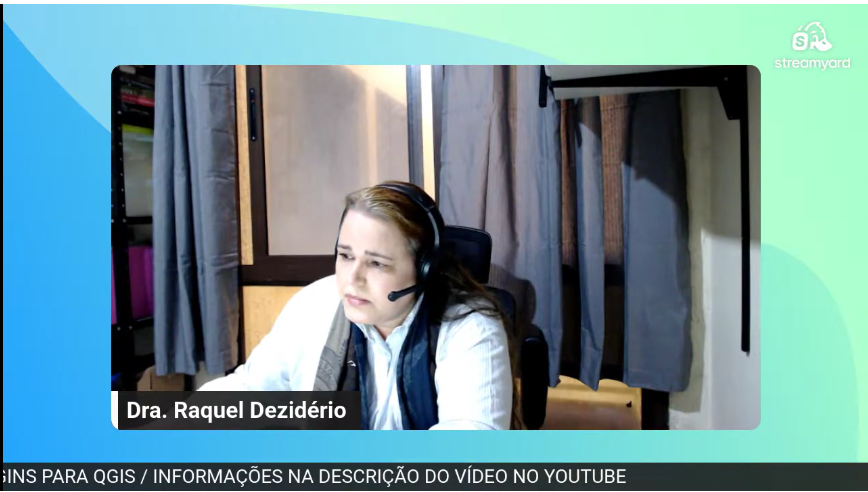
 

img1 Dr. Raquel Dezidério Souto leading Session 3 of the Ciclo de Oficinas OSM 2026. The files used in Workshop 3 can be found in the video description. Link


IVIDES DATA® successfully held the third live training session of the Ciclo de Oficinas OSM 2026 on June 12, during which the following were presented:


* View and download data on OSM.org
* Access to geoservices for loading OSM as a base layer - NextGIS QuickMapServices plugin
* Downloading data in QGIS (version 3.22 or later) – QuickOSM and OSM Downloader plugins
* Applied cases — accessibility, urban tree cover, and the geolocation of buildings on areas subject to disasters


See full entry

Location: Recreio dos Bandeirantes, Rio de Janeiro, Southeast Region, Brazil

Read in English

IVIDES DATA® realiza a terceira sessão do Ciclo de Oficinas OSM 2026, tratando de plugins para QGIS. Casos aplicados sobre acessibilidade, arborização urbana e localização de edificações em áreas de risco foram apresentados


img1 Dra. Raquel Dezidério Souto conduzindo a sessão 3 do Ciclo de Oficinas OSM 2026. Os arquivos utilizados na oficina 3 podem ser encontrados na descrição do vídeo. Link


A empresa IVIDES DATA® realizou com sucesso o terceiro treinamento ao vivo do Ciclo de Oficinas OpenStreetMap 2026, em 12 de junho, quando foram apresentados:


* Consulta e download dos dados em OSM.org
* Acesso a geosserviços para carregamento do OSM como base layer (camada base) - plugin NextGIS QuickMapServices
* Download dos dados no QGIS (versão 3.22 ou superior) – plugins QuickOSM e OSM Downloader
* Demonstração de casos aplicados - acessibilidade, arborização urbana, edificações localizadas em encostas


See full entry

Location: Recreio dos Bandeirantes, Rio de Janeiro, Região Sudeste, Brasil

This is a very simple idea: given a set of GPX traces for a hike you are planning to take, generate a file containing all the waypoints of interest within the area covered by the GPX traces. I create a buffer around the GPX traces and extract the area from OSM. I define a set of tags of interest. I use Ollama with Mistral Nemo to make sure that POIs make sense to visit while walking on foot, as places are sometimes mislabeled in OSM. Before saving the waypoints to a GPX file, I use Ollama again to generate waypoint descriptions and set labels for each waypoint. Feel free to try it out! The code is on GitHub.

Location: Khu phố 1, Saigon, Thủ Đức, Ho Chi Minh City, Vietnam
Posted by Jfact0ry on 19 June 2026 in English.

Mapping Sitka is pretty much my identity. I was upset when someone reverted my work because honestly I’ve been working every waking hour for a few months now. It was good though because I needed to step back and not take it too seriously. I’ve had some manic episodes late in life and they unlocked some anger I’m not familiar with. It was actually impressive how mad I got. Anyway, what are these diaries for if not a super personal post? Stay mappy people

Location: Sitka, Alaska, 99835, United States
Posted by pnorman on 18 June 2026 in English.

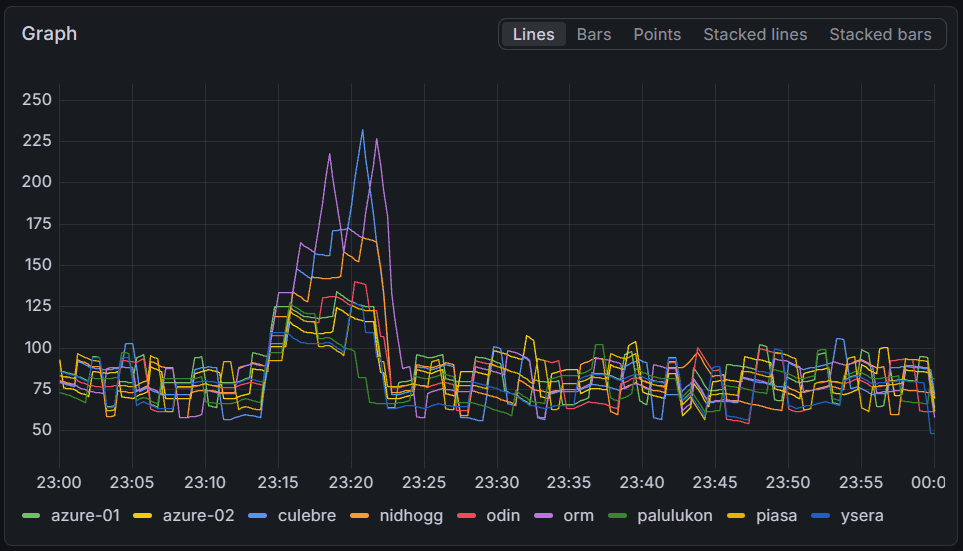
Earlier today I had to check an alarm on the servers. The alarm was for a non-issue, but I happened to notice a momentary delay to replication across multiple services and I wanted to investigate.

The rendering servers fell up to four minutes behind on some servers, with all servers falling at least a minute behind normal. Interestingly, there does not seem to be a correlation between the delay and the server capacity.

See full entry

Editora IVIDES has published the Swahili translation of the FPOSM booklet on the ODbL license


capa_sw


Download SW VERSION


The original work Tout savoir sur la license ODbL : la licence d’OpenStreetMap pour cartographier en commun was written in French in 2024 and updated in 2026 by the Fédération des Pros d’OSM, a French organization that brings together various companies and professionals working with open data, OpenStreetMap, and related software. The authors of the original booklet are: François Lacombe (Datactivist), Florian Lainez (Jungle Bus), Antoine Riche (Carto’Cité) and Christophe Biez (Latitude-Cartagène Cartographies).

The translation to Swahili was done by Hemed Lungo and Tatu Sultan Lungo, from Tanzania, and the booklet was edited by Raquel Dezidério Souto (Editora IVIDES).

The work is licensed under the Creative Commons Attribution-ShareAlike 2.0 France (CC BY-SA 2.0 FR). Text of the license


Download EN VERSION


Download VERSÃO PT


See full entry

Posted by AlexSpritze on 17 June 2026 in German (Deutsch).

Manchmal ist Wikimedia Commons eine gute Quelle für Objekte, die in OpenStreetMap fehlen, und manchmal ist es umgekehrt.

Aber wie lassen sich Informationen aus beiden schnell verbinden und am besten noch visualisieren?

Der naive Ansatz

💡 Daten per Abfrage aus Commons und OSM holen und in uMap anzeigen.

🏁 Als Beispiel möchte ich hier alle Ortseingangsschilder aus Sachsen-Anhalt visualisieren.

Naiv bedeutet hier natürlich auch, dass in Commons nicht alle Bilder ihre Standorte koodiert haben.

Wikimedia Commons mit PetScan abfragen

Wikimedia Commons bietet mit PetScan ein Tool an, das unter anderem auch nach KML exportiert. Ein Dateiformat, das nach uMap importiert werden kann. Folgende Parameter erzeugen in PetScan nach einem Klick auf “Do It” eine KML-Datei mit den entsprechenden Geo-Informationen:

Parameter Wert
Language commons
Project wikimedia
Depth 1
Categories Zeichen 310 in Saxony-Anhalt
Page Properties: Namespaces Commons, File
Output: Format KML
Output: Page Metadata Image, Coordinates, Default sort

Wichtig ist auch Depth auf größer 0 zu setzen, damit untergeordnete Kategorien miteinbezogen werden, so dass z.B. auch Ortseingangsschilder aus dem Saalekreis gefunden werden.

Der Inhalt der KML sieht dann ungefähr so aus:

<?xml version="1.0" encoding="UTF-8"?>
<kml xmlns="http://www.opengis.net/kml/2.2">
  <Document>
    <Placemark>
      <name>Hundeluft.jpg</name>
      <ExtendedData>
        <Data name="url">
          <value>https://commons.wikimedia.org/wiki/File%3AHundeluft%2Ejpg</value>
        </Data>
      </ExtendedData>
      <Point>
        <coordinates>12.34471667, 51.96599722, 0.</coordinates>
      </Point>
    </Placemark>
...

Falls die Datei im Browser angezeigt wird, muss man sie natürlich noch lokal speichern.

OSM Daten in uMap anzeigen

See full entry

Location: Cölbigk, Ilberstedt, Saale-Wipper, Salzlandkreis, Sachsen-Anhalt, 06408, Deutschland

I’ve been reflecting on the balance between mapping for ‘volume’ and mapping for ‘precision.’ While I understand the value of quick, large-area edits for global visibility, I find it a bit puzzling when polygons are generalized to the point of overlapping everything in sight—especially when high-resolution imagery is available.

I’ve noticed a trend where edit counts are sometimes treated as the ultimate metric of a mapper’s worth. I reckon we should be careful not to let the pursuit of ‘top contributor’ stats overshadow the primary goal of creating a detailed, accurate map for everyone. For me, a well-traced building or a correctly aligned path is worth far more than a high edit count achieved through imprecise mass-mapping. I’m always keen to learn the best practices, so if there’s a standard way to maintain precision while contributing efficiently, I’m all ears. Cheers.

(English version below)

Desafíos y adaptaciones en la organización de mapatones anticipatorios

En el equipo América Latina de HOT tenemos 4 años organizando mapatones preventivos nacionales en México, Perú, Ecuador y Colombia. Estos mapatones responden al 100% a una necesidad de los gobiernos locales y organizaciones dedicadas a la preparación y respuesta ante desastres. La organización de dichos mapatones entonces definen áreas específicas de máxima exposición a desastres en lugares donde llegan estos a ser conocidos porque son recurrentes. Nos lleva a concentrarnos en la categoría de los desastres climáticos. Esto también define en buena parte la temporada en la que deben suceder los mapatones para proceder datos de forma anticipada, no después de que haya pasado.

Otra característica que define la temporalidad de estos mapatones es cuando la población que más participa en las actividades se encuentra con disponibilidad. El conjunto de estos dos factores es lo que define (de manera imperfecta) los periodos de estos mapatones anticipatorios.

El factor climático y académico en la programación

See full entry

Location: Doctores, Roma, Ciudad de México, Cuauhtémoc, Ciudad de México, 06720, México

Mapadour, le groupe des contributeur⋅rices OpenStreetMap du Pays Basque et Sud Landes, a été particulièrement actif ces derniers mois.

Sa dernière réunion le 11 juin 2026 à Ustaritz est l’occasion de faire le point sur les dynamiques et les projets auxquels participe le groupe.

Ses membres interviennent localement mais aussi bien au-delà, en Nouvelle-Aquitaine jusqu’aux confins de la Finlande en passant par Paris et l’Italie sur toutes sortes de problématiques.

Panoramax

Les contributeur⋅rices locaux ont été très actifs puisqu’avec la Gopro d’OSM France et les autres matériels personnels pour alimenter la connaissance du territoire avec 228 003 photos et 2 747,66 km parcourus entre juin 2025 et mai 2026.

Ils ont également expérimenté plusieurs nouvelles fonctionnalités :

See full entry

State of the Map US 2026 Presented by OpenStreetMap US was this weekend in Madison, Wisconsin. As any good breakfast lover, I tried to seek out the best breakfast food in the area of Capitol Square. Here’s my thoughts:

Friday: Wonderstate Coffee (on OSM)

This is a very modern looking coffee shop (think crisp whites and light woods - if Apple had a coffee shop) with a great seating area outside overlooking the Capitol Square and is in a very nice spot to be shaded in the morning to enjoy your coffee or small food item. Only downside to sitting outside is you are very close to the road - but that’s to be expected in a downtown area.

I ordered a plain bagel and cream cheese, and an iced coffee with cream and sugar. Typically where I am this means drip coffee poured over ice, but the barista recommended an Americano… when in Rome I suppose. The coffee was delicious, and the bagel came out with more cream cheese than I think I have ever seen on a bagel (not complaining! Just surprising!)

Cost: $9.23 Rating: 7/10

Saturday: Marigold Kitchen (on OSM)

Such a cute spot! I was searching this day for a good omelette and this place seemed highly recommended. The feel was much more artsy coffeehouse vibe, plenty of lighting and a small outdoor seating area, but I ate inside. I was greeted and handed a menu at the door, ordered at the counter, and was recommended the pancakes as well as the omelette if I was hungry enough. Very friendly staff throughout even during what was clearly an elevated breakfast rush with the farmers market getting started just outside!

See full entry

Posted by Feuerwehr Talling on 14 June 2026 in German (Deutsch).

Hallo zusammen, nach meiner Ansicht wäre es sinnvoll ein Symbol für einen AED zu erstellen. Dann könnte man auch die Standorte von diesen Geräten in den Karten einpflegen. Die Abkürzung AED steht für Automatisierter Externer Defibrillator (oft auch als „Laien-Defi“ oder „Herzstarter“ bezeichnet). Es handelt sich um ein kleines, tragbares medizinisches Gerät, das bei einem plötzlichen Herzstillstand durch gezielte Stromstöße lebensgefährliche Herzrhythmusstörungen beenden kann. Diese Geräte sind wichtig für Ersthelfer die bereits eine Reanimation durchführen bevor der Rettungsdienst eintrifft. Ein Symbol wäre zum Beispiel wie in meinem Link vorgeschlagen eine gute Idee. https://shop.murer-feuerschutz.de/images/thumbs/0028576_241717.jpeg Ich würde mich freuen, wenn man dies umsetzen könnte. Mit freundlichen Grüßen D. Weinig

Location: Talling, Thalfang am Erbeskopf, Landkreis Bernkastel-Wittlich, Rheinland-Pfalz, Deutschland

Hi again!

In my previous diary entry I introduced myself and my GSoC project with Valhalla, and I mentioned we were still putting the finishing touches on the exact main goal. Now we have it! We’re focusing on area routing. This is basically means making the router cross open pedestrian areas (like squares) instead of walking around them and generating weird and inefficient routes. This diary entry is a deep dive into the research I’ve done while exploring the different options.

The problem with pedestrian areas

When you ask a router to go across a square, you would expect it to cross it like any person would. But a lot of routers don’t do that, they may send you around the perimeter or go along the streets surrounding the square. The problem here is that the open area has no “ways” inside of it to travel on.

Let’s see one example (using Valhalla) on Plaza Santo Domingo in Murcia (my hometown!):

See full entry

Please help me raise funds to purchase the missing sheets from the complete historical 1:50,000 topographic map series of Zimbabwe, formerly Rhodesia.

https://gofund.me/f12d5f3d2

Donate and more information at https://www.gofundme.com/f/purchase-historical-zimbabwe-topographic-maps

Previous donation drives:

In the unlikely event that any funds remain after purchasing the Zimbabwe map sheets, they will be used to buy missing sheets from the Lesotho or Malawi 1:50,000 topographic map series, which are planned as future projects.

Location: Braeside, Harare, Zimbabwe

If you use the amazing better-osm-org browser extension/userscript to review changesets, you are probably familiar with its default red, green, and yellow diff highlighting.

While the default colors are great, sometimes you want a custom color scheme that feels more comfortable for your eyes during long validation sessions. For instance, changing the added tags to a cool cyan, keeping deleted tags red, and making modified tags a soft cream/yellow.

Since the script dynamically manages light/dark themes, the easiest way to override these colors globally without messing up the extension’s code is by using custom CSS via the Stylus extension.

How to Apply It:
  1. Install the Stylus extension (Chrome/Firefox/Edge).
  2. Go to openstreetmap.org.
  3. Click the Stylus extension icon and select ”(+) Write style for: openstreetmap.org”.
  4. Paste the CSS code below into the editor, give it a name (e.g., Better OSM Custom Colors), and hit Save.
The CSS Code:
/* 1. MODIFIED TAGS -> SOFT CREAM / YELLOW */
    tr.quick-look-modified-tag th,
    tr.quick-look-modified-tag td {
        background: rgba(255, 235, 150, 0.7) !important;
        color: #000000 !important;
    }

/* 2. DELETED TAGS -> RED */
    tr.quick-look-deleted-tag th,
    tr.quick-look-deleted-tag td {
        background: rgba(238, 51, 9, 0.6) !important;
        color: #000000 !important;
    }

/* 3. NEW TAGS -> CYAN */
    tr.quick-look-new-tag th,
    tr.quick-look-new-tag td,
    tr.quick-look-added-tag th,
    tr.quick-look-added-tag td {
        background: rgba(0, 200, 220, 0.6) !important;
        color: #000000 !important;
    }

As I had mentioned in my last post where I explain what they are, I had long planned to make a video about mapping historic lifting stones. It took a while to get to sites and some footage etc and to figure out how to map them best, at least in my opinion, but the video is now online on Youtube. I’ve added subtitles in English, German, Irish, Basque, Finnish, Icelandic and Welsh, because these are to my knowledge the countries where the tradition is still upheld or has been revived. For everything but German, I used the auto-translate function, but YouTube tends to not know the correct word for “lifting stone” in the respective languages, so if anyone can correct me on the subtitles, I’d be grateful. For the same reason, I did not translate the title of the videos into most of these languages, and also because I didn’t want to give the impression that it was completely available in these languages. It is possible now, I think, to have the audio generated in other languages, but that is too creepy to me. As curious as I am to hear myself speak fluent Welsh, I’ll give it a pass.

I’m hoping to do another shorter video about mapping them using OSMAnd, but I need to get to a site of an unmapped stone first which is easier said than done, considering I don’t drive and there are not that many unmapped ones near me. The sites in the current video were accessible by public transport, walking and cycling, so it’s a very sustainable video in its production.

I’ve also done a bit more work on the English wiki page for historic=lifting_stone, translated it into German and written a wiki page for leisure=lifting_stone. The latter is for the newly placed stones and the historic ones that are being lifted again.

I would appreciate if people capable of the above languages could translate the wiki pages into those languages to get a wider coverage of them being mapped.

En menos de un mes, en Colombia vamos a organizar el primer State of the Map. Este evento conmemora muchas cosas: primero, que la comunidad OSM Colombia es capaz de hacer un evento de marca internacional; segundo, que tenemos una entidad formalmente organizada para representar la comunidad la cual es la Asociación de Cartografía Colaborativa de Colombia - AC3; tercero, que dicha Asociación es oficialmente un capítulo de la fundación OpenStreetMap mundial, para representar a OSM en Colombia.

Como parte de la organización que estamos haciendo, queremos invitar a muchas personas que estén interesadas en el mapa para que nos reunamos por motivo de este evento, ya que no son solo charlas de OSM, sino también es unir a la comunidad, compartir, conocerlos. Entre las cosas que queremos, es proponer un punto de encuentro para todos esos mapeadores de OSM, y no solo los usuarios actuales sino que también queremos invitar a esos usuarios que contribuyeron mucho en el pasado, y que de pronto ya no están tan interesados en el proyecto, pero de pronto, al ver a la comunidad unida, se vuelven a interesar.

Para esto no encontré una utilidad en Internet disponible. Como ya lo mencioné entre líneas, la de Neis Pascal es solo para los usuarios que han contribuido en los últimos 60 días, pero queríamos tener la lista de los usuarios que han apoyado al mapa de Colombia desde su origen. Entonces, por medio del IDE Cursor y con un par de buenos prompts de AI, me generó este proyecto: https://github.com/angoca/topOSMcontributors.

Después de descargar el archivo de GeoFrabrik que es con el que se puede hacer la magia, se procesaron todo el histórico de Colombia y pude obtener los 500 usuarios que más han contribuido en Colombia.

See full entry

Location: UPZs Localidad Teusaquillo, Localidad Teusaquillo, Bogotá, Bogotá, Distrito Capital, RAP (Especial) Central, Colombia