OpenStreetMap logo OpenStreetMap

Users' Diaries

Recent diary entries

Posted by AngocA on 12 January 2025 in Spanish (Español).

El mapeo de interiores no es muy popular ya que requiere conocimientos de la distribución de los espacios dentro de un edificio. Normalmente esto se hace por medio de un plano, que puede ser el de evacuación. Aunque aquí empieza el problema de permisos de uso de datos para mapear en OpenStreetMap.

En Colombia estamos comenzando esta labor, pero quise listar lo que se ha hecho en Latam, y reconocer a los mapeadores:

See full entry

  • 들어가기에 앞서, LuxuryCoop님의 기존 제안을 보고 영감을 얻어 새로 올린 글입니다. 아래 글을 읽어보기에 앞서, 해당 글을 먼저 읽어보시는 것을 추천드립니다.

본 게시글에서는 지역의 label 태그를 위계별로 어떻게 사용하여야 할 지에 대하여 특히 주목하여 작성해 보았습니다. 기본적으로 OSM Wiki에 명시된 대로 각각의 place 태그에 대한 원론적인 위계에 주목하여 한국의 행정 구역 라벨 위계를 새로이 구성해 보았습니다.

공식 행정구역

광역자치단체

  • place=province - 도(道), 특별시, 광역시, 특별자치도, 특별자치시에 사용

해당 태그는 일반적으로 주나 도 등 국가의 1차 행정구역을 나타낼 때 사용되며, 언급한 자치단체 모두 동일하게 대한민국의 1차 행정구역을 나타내므로 모두 ‘province’로 동일하게 표현하였습니다.

기초자치단체

  • place=city - 시(市)
  • place=county - 군(郡)

시와 군의 경우는 현행 유지되는 태그를 그대로 사용하였습니다.

  • place=district - 특별시, 광역시 등의 자치구
  • place=borough - 자치구가 아닌 구; 일반구

자치구의 경우 시, 군과 동등한 위계에 있는 기초자치단체로써, 지방 정부에 의해 자치적으로 운영되는 행정 구역이라는, OSM Wiki에 설명되어 있는 district과 그 사용례를 같이 한다는 점에 착안하여 district로 제안해 보았습니다.

일반구의 경우, 자치구와 마찬가지로 구(區)라는 명칭을 공유한다는 점은 존재하지만, 자치구와 달리 별도의 자치권이 없는 시(市) 내부의 하위 행정구역이라는 점을 고려할 때, 자치구와는 다른 태그를 이용하여 이를 표현해야 할 필요성이 있다고 생각하였습니다. 이러한 점을 고려할 때, 일반적으로 도시 ‘내부’의 구역임을 나타내는 ‘borough’ 태그를 사용하여 달리 표기하는 것을 제안하는 바입니다.

  • place=subdistrict - 행정동

현행에서는 place=quarter가 동을 표현하는 데 사용되고 있지만, 해당 태그는 행정 구역을 명시한다기보다 도시 내 특정 구역을 태그하는 데 이용되는 점을 고려해보면, 거주 규모와는 별개로 행정구역임을 명확히 명시하는 subdistrict 태그를 이용하여 행정동을 표현하는 것이 좀 더 합리적이지 않을까 제안합니다. district와 연계하는 경우 구와 동의 계층이 명확해진다는 점도 존재합니다.

  • ? - 법정동

‘법정동’의 경우는 일부 명칭을 제외하고는 지적 사무 외 행정적 사무와 실생활에서는 거의 쓰이지 않는다는 점을 고려할 때 지역적으로 잘 알려진 몇 법정동명을 제외하고는 법정동 relation의 name으로만 존치하고 label은 삭제합니다. 또한, 잘 알려진 몇 법정동명의 경우에는 규모에 따라suburb/quarter/neighbourhood로 구분하여 남기는 것을 제안합니다.

사실 법정동의 경우에는, 제가 제안하는 위계 구조 상에서 명확히 처리하기에는 애매한 바가 있어서, 혹시 이와 관련하여 좋은 의견 있으면 남겨주시면 감사하겠습니다.

  • place=town - 읍(邑)/면(面)

기존 방식대로 읍, 면의 경우는 town으로 태그합니다. 소규모 면의 경우도 town으로 묶여 과대표기될 수 있다는 우려가 존재하기는 하나, 읍과 면 둘 다 동일한 행정 위계를 갖는다는 점을 고려하여 town으로 동일하게 태그합니다.

  • place=village - 법정리(里)
  • place=hamlet - 행정리/자연부락

현행대로 법정리의 경우 village로 표기하고, 법정리에서 행정 편의 상 더 잘게 쪼개진 행정리 혹은 자연부락의 경우 hamlet으로 표기합니다.

공식적인 행정구역이 아닌 지명

공식적인 행정구역에는 포함되지 않으나, 국지적 혹은 전국적으로 통용되는 지명에 대해서는 다음과 같은 태그 방법을 제안합니다. 각 place 태그 별 예시는 이해를 돕기 위한 단순 예시에 불과하다는 점 참고하시면 되겠습니다.

See full entry

Posted by coteyka on 11 January 2025 in Russian (Русский). Last updated on 22 January 2025.
Нам нужно больше пользоваться сервисами для панорам, такими как Panoramax.

Яндекс это конечно отличный сервис, но он все же не самый дружелюбный к OSM’у, и права на его панорамы могут отозвать в любой момент. Призываю всех неравнодушных людей у которых есть файлы уличных панорам (или даже фотографии уличных объектов) зайти на https://panoramax.openstreetmap.fr/upload и загрузить их туда. У iD есть отдельный слой для панорам с этого сайта, и у людей которые картируют с него будет больше открытых данных с которых будет удобнее брать информацию.

Posted by YerevanTreeMap on 9 January 2025 in English.

Hey hey. We at the Yerevan Tree Map project were pulling to our database new nodes tagged as natural=tree for a while now, without actually pushing changes back. Now we are starting to do so. The OSM API is not quite straightforward, so we’re learning on the go. We have some 4k plus trees to push, we’ll be adding them in small batches. Later we’ll start pushing updates to existing tree nodes (e.g. when someone measures the tree or updates its state).

Location: Kentron, Yerevan, Armenia

(English below, thanks to Deepl.com)

Ce post a été initialement publié ici.

Des données OSM en anglais, mais aussi en français, accessibles dans l’IFL pour les pays francophones du Sud

Des données OSM téléchargeables avec des attributs dans une langue autre que l’anglais, non pas avec un service web, mais une plateforme dédiée au partage de données et métadonnées géographiques, où l’on peut comprendre, voir, interroger, filtrer avant de télécharger : c’est ce que permet cette approche ETL (pour Extract, Transform, Load, soit en français « Extraction, Transformation et Chargement ») dans l’Infrastructure de Données Spatiales des Libres Géographes. Dans ce billet, je reviens sur le contexte et l’historique de ce projet personnel mené sur mon temps libre, avant d’expliquer l’approche technique mise en œuvre et, évidemment, comment accéder à ces données.

Le contexte : sortir du « english fits for all »

Si l’anglais domine l’écosystème OSM et reste la langue de référence du projet, plusieurs initiatives permettent aux non-anglophones de participer au projet et d’en bénéficier : un forum multilingue, la traduction du wiki et de certaines plateformes d’auto-apprentissage, des interfaces utilisateur traduites pour les applications et les éditeurs, y compris les préréglages d’étiquettes OSM.

Mais quelle que soit la technologie ou le service utilisé, les données OSM brutes, une fois téléchargées, restent exclusivement en anglais, et toute recherche ou filtrage des données OSM dans un logiciel SIG ne peut se faire que dans cette langue.

Ayant beaucoup formé à l’utilisation des données OSM en géomatique (notamment QGIS) depuis 2011, j’ai été vite confronté aux difficultés qu’ont pas mal de francophones non anglophones à exploiter les attributs des données OSM. Difficultés d’autant plus frustrantes, dans le cas des pays du Sud, qu’il s’agissait souvent des premières données détaillées disponibles sur leur territoire. Une barrière se levait, mais une autre lui succédait.

See full entry

I just discovered https://github.com/openstreetmap/tile-attribution And it seems like a great way to get involved with openstreetmap via GitHub - It doesn’t require any coding ability, one would need an active GitHub acount to add an issue to the issue tracker but basically find a site using your favourite search engines (lets say https//ddg.gg as an example).

Check any sites who are not providing attribution to openstreetmap when using openstreetmap and report the full hostname of website to the issue tracker :-)

What can we all share to people on social media we use to promote friends & family to support OpenStreetMap’s work?

Have a great day! Josh G of Australia.

https://hardened.computer/@xuid0/113795267986230039

El Palacete Pinho, en el barrio Ciudad Vieja en Belém de Pará (Brasil), fue la sede de la tan ansiada reunión de mapeadoras y mapeadores de Latinoamérica. Habían pasado cinco años (pandemia incluida) del último SOTM en Encarnación, Paraguay. Pero, para mí, eran seis años, desde la última vez que participé en el evento, en 2018, en Buenos Aires. Así, que ese hermoso palacio, ubicado a pocos metros del río Acará, fue el espacio en el que nos conocimos, encontramos y reencontramos; durante un fin de semana aprovechamos para reconectar con la comunidad regional de OpenStreetMap. De este modo, finalizamos una semana llena de eventos que comenzó con la FOSS4G el lunes antes de ese fin de semana.

See full entry

Posted by kaxtillo on 6 January 2025 in Spanish (Español). Last updated on 7 January 2025.

John Snow.jpg

El brote de cólera de 1854 en Londres representa un hito fundamental en la historia de la epidemiología. Este estudio de caso nos transporta a una época en la que la comprensión de las enfermedades infecciosas era limitada y las teorías sobre su propagación eran muy diferentes a las actuales. A través de la meticulosa investigación de John Snow, descubriremos cómo un médico logró desentrañar el misterio de este brote, desafiando las creencias establecidas y sentando las bases de la epidemiología moderna. Este caso no solo nos enseña sobre la importancia de la investigación epidemiológica para controlar enfermedades infecciosas, sino que también nos revela cómo la combinación de observación cuidadosa, pensamiento crítico y métodos innovadores puede conducir a descubrimientos transformadores en el campo de la salud pública y ¡Lo descubrió haciendo el primer análisis geoespacial de la historia!

See full entry

Starting the new year with milestone achievements! In this 22nd development update, we’re excited to present comprehensive mobile support improvements across OpenStreetMap-NG. We’ve also reached critical development milestones that put us on the final stretch toward public beta testing.

🔖 You can read other development diaries here:
osm.org/user/NorthCrab/diary/

⭐ This project is open-source — join us today:
https://github.com/openstreetmap-ng/openstreetmap-ng

GitHub Stars

🛈 This initiative is not affiliated with the OpenStreetMap Foundation.


Video Summary

This week’s video demonstration focuses primarily on our mobile interface improvements. Through practical examples and side-by-side comparisons, I showcase how OpenStreetMap-NG elevates the mobile experience.

⬇ Click the image below to play

See full entry

Posted by SekeRob on 4 January 2025 in English. Last updated on 4 February 2026.

4th Jan 2025 and 10 Million, nodes that is, I’ve set, dragged, deleted as at yesterday and the 2 days downtime broke the 1500+ days series of uninterrupted mapping. Here’s to the next.

April 1, 25 , really, and we’re on 11 Million, 3 months near exactly or 11,111 nodes a day, keeping me from the streets away.

Sept 12, 2025, a slow one with six zeros added to get to 12,004,134 exact. It’s a still summer and sunny so the pushbike will be getting more attention today.

Dec. 12, 2025, ‘back on track’, one more million nodes in 3 months exact, only 13,011,800 according to the HDYC tracker.

Feb 4, 2025, reached 2000 mapping days and a coowl 1 million nodes added to OSM in 60 days per the HDYC site., 14 Million cum is up somewhere around the 10-12th,.. that figures \o/.

Posted by DeBigC on 4 January 2025 in English.

As time passes I am delving further into the discovery that I outlined here, and contextualised a little more here and all relating to the Fingal task set up by myself and the osm community three years ago.

In quantum of the problem there are new data available from the Heigit counting service. This shows that as the validation continued up to the 18th December 2024 when the task was a year old an additional 14 thousand missing buildings were added.

heigit3

Looking further into this missing building set it is distributed as follows by building tags:

*building=shed up 3700

*building=garage up 1800

*building=farm_auxiliary up 200

*building=service up 58

*building=ruins up 56

There is also some re-tagging of building objects from the building=yes tag, which mappers were requested to attempt to do.

See full entry

Alt text

On the 22nd and 23rd of November 2024, I visited the Ho Technical University (HTU) YouthMappers chapter for an exciting two-day program sponsored by OSM Ghana. These two days were not just about mapping but about igniting passion, fostering collaboration, and sharing stories that inspire.

Day One: Presentations and Knowledge Sharing

See full entry

Location: Ahadede, Ho, Ho Municipal District, Volta Region, VH-0010-3089, Ghana
Posted by netjeff on 2 January 2025 in English. Last updated on 19 April 2025.

I’ve deleted OSM node 151352138 which was place=hamlet name=Dominion within the city of Longmont, CO.

It looks like this node was (automatically?) added to OSM based on USGS GNIS feature id 178314. This GNIS feature 178314 includes the following, my emphasis

  • Class: Populated Place
  • Feature code: Unincorporated Place
  • Description: railroad siding
  • Entry Date: October 13, 1978

I’ve lived in Longmont since 2008, and I’ve never seen or heard anyone refer to this location or area as “Dominion”. This GNIS “railroad siding” feature should never have been added to OSM as a place=hamlet. I checked current aerial imagery, and while there is a BNSF railway line nearby, there is definitely (no longer?) a siding near this location.

So in changeset 160974302 I’ve deleted OSM node 151352138 which was place=hamlet name=Dominion

Location: 40.143, -105.127
Posted by AlexSpritze on 2 January 2025 in German (Deutsch). Last updated on 1 October 2025.

Wikimedia Commons

Stolpersteine

Einige Stolpersteine haben keinen Commons-Bilder, weil sie eigentlich Sammel-Stolpersteine sind

area["de:amtlicher_gemeindeschluessel"="15002000"]->.municipality;
(
nw[!"wikimedia_commons"]["memorial"="stolperstein"]
  (area.municipality);
);
out;

Noch mehr Commons-Bilder für diverse Nodes

area["de:amtlicher_gemeindeschluessel"="15002000"]->.municipality;
(
(nw["historic"="memorial"][!"wikimedia_commons"](area.municipality););
(nw["amenity"="clock"][!"wikimedia_commons"](area.municipality););
(nw["tourism"="information"][!"wikimedia_commons"](area.municipality););
);

out;
Posted by M!dgard on 1 January 2025 in English. Last updated on 2 January 2025.

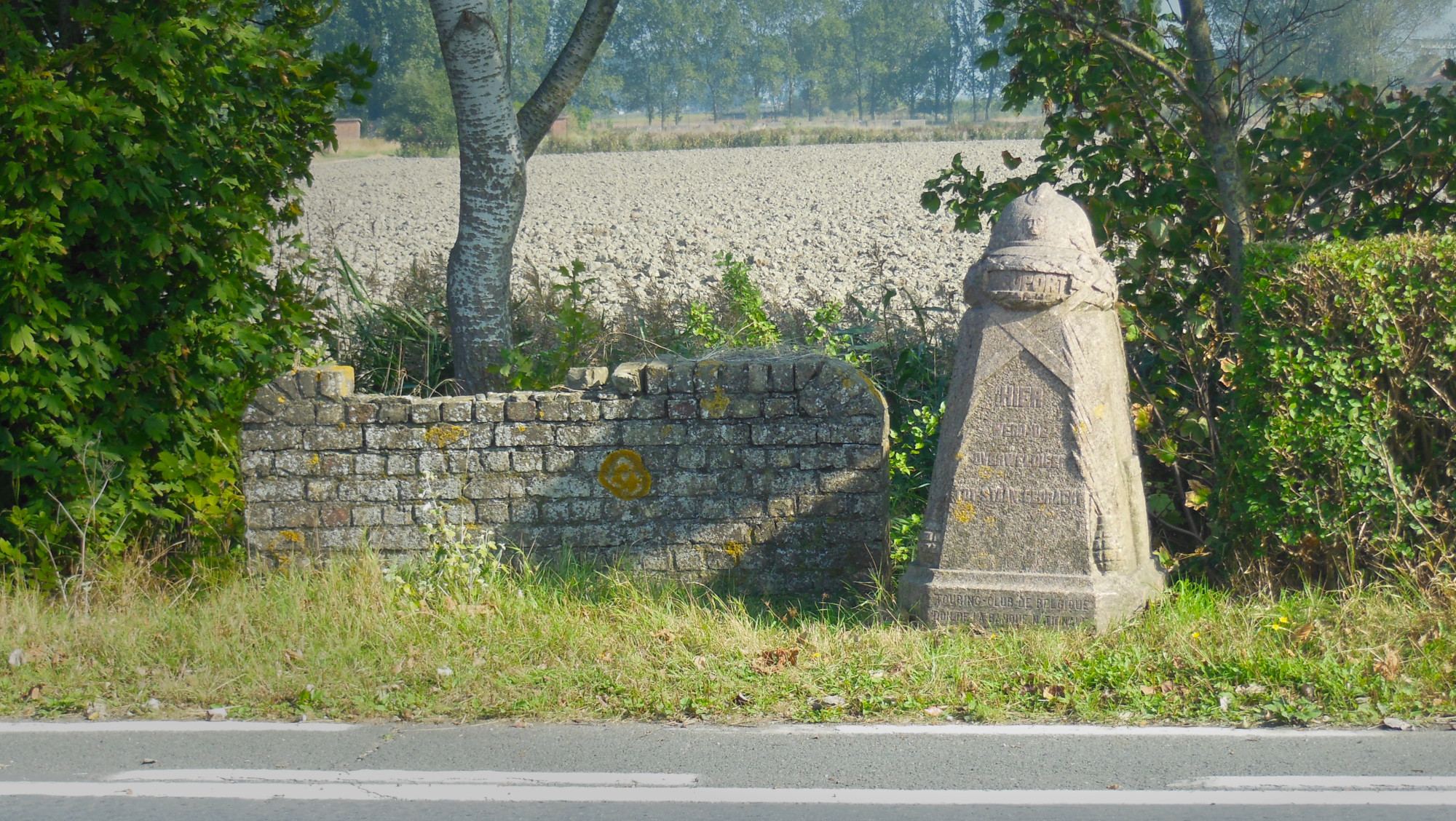
Earlier today I OSM-stumbled upon a stele marking the western front line of the First World War in Belgium and France. In Dutch we apparently call them demarcatiepalen, a term which I find amusingly technical sounding. In French they’re often called les bornes Vauthier, named after the veteran who took the initiative of erecting them. Carved from pink granite, they stand about a metre tall. There’s a whole line of them, but I noticed that they could use a lot of work, so that became my project for this evening.

A roadside memorial, a somewhat conal block carved from pink granite and about a metre high. The top of the memorial is shaped like a helmet. The engraving reads "Here the invader was brought to a standstill" but in Dutch. The memorial is set in green grass at a roadside, between a small brick wall and a hedge.

After a few hours’ work (including some distraction due to nearby unmapped stables), the 19 extant Belgian steles have all been found, added and homogenised in OSM and referenced to the database of Onroerend Erfgoed, the heritage agency of the Flemish government.

Tada: https://overpass-turbo.eu/s/1Wtx

See full entry

Location: Zwarte Leen, Zillebeke, Ypres, Ieper, West Flanders, Flanders, 8902, Belgium
Posted by ANOKEY on 1 January 2025 in English.

This last 5 years I have been faced with a terrifyingly real and all consuming gang stalking problem (concept which I didn’t even fully believe in until at the grips of it myself), bringing with it cognitive dissonance, dissociation and confusion through gas-lighting, bullying, financial and emotional abuse by those who are supposed to be closest to me.

it feels like I have lost all sense of footing; like solid ground could very well turn out to have been ocean this whole time and it would not be all that shocking.

My participation in this project is an attempt to help me reconnect with myself and my surroundings

By deliberately noticing everything it encompasses, and by thoroughly researching each of it’s composing elements to be able to represent them with as much fidelity as possible, I hope to regain some sense of direction and purpose and find refuge from stagnancy, isolation and depression.

Hi, my name is Joh, 
and I will stand strong and make best of this, and every situation. 
I shall bend not break,
I shall be, 
Because I have as much right to do so as everyone else.
Location: Downtown, Vancouver, Metro Vancouver Regional District, British Columbia, Canada
Posted by qeef on 1 January 2025 in English. Last updated on 20 July 2025.

This is the developer’s diary concerning the fifth year of the damn project – the project that helps mappers by dividing a big area into smaller planar shapes that people can map together.

The damn project is currently used by few mappers as a tool for tracking personal mapping. (Does it make it a competitor to the SimpleTaskManager?)

In 2024, we had some problems:

  • We had performance issues when working with more than 300 000 squares in a single area; we solved these issues by pagination and forbidding creation of areas with more than 10 000 squares.

  • The damn JavaScript clients confuse mappers and we need to be serious about it; we will address this issue in 2025, but it’s not yet decided how. We are open to ideas!

2024 did not bring much to the damn project, though there are some highlights:

  • Probably no suprise that we moved to OAuth2. The amount of work is -21 lines of code. We welcome such changes.

  • I wrote Unofficial design documents for HOT Tasking Manager.

    The original intent of the damn project was to show that HOT Tasking Manager (HOT TM) can be done better. To help HOT TM developers, last year I wrote Unofficial design documents for HOT Tasking Manager. There is (obviously) more reasoning and comparison than in the damn server dev doc, but I don’t think it will help anyway. There is too much work and I saw the HOT TM source code. It’s unmaintainable, in my opinion.

  • We implemented enforce divide to squares function when creating new area.

    If the (area’s GeoJSON)’s FeatureCollection has member 'name' then divide to squares function is NOT used. In such a case it’s expected you already divided the area – this is for compatibility reasons with MapSwipe. enforce divide to squares overrides this behavior, enforcing the division of the area to squares even if the 'name' member is present in the GeoJSON’s FeatureCollection of the area.

And finally, the plan for 2025 – there are two main things:

See full entry