OpenStreetMap logo OpenStreetMap

Users' Diaries

Recent diary entries

Posted by SomeoneElse on 6 February 2024 in English.

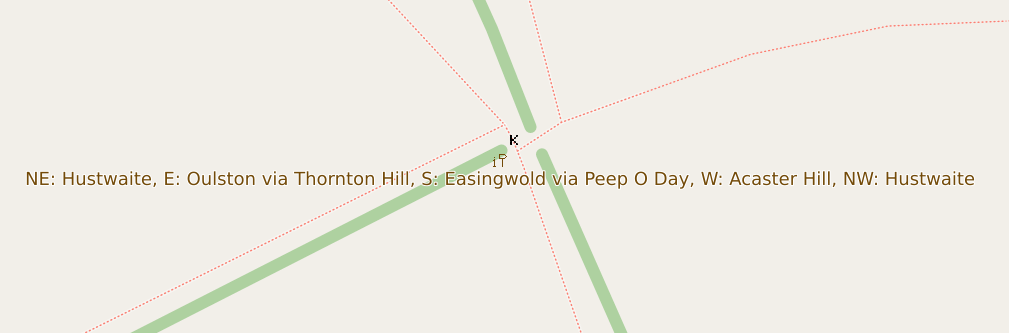
Signpost near Husthwaite

Although the raster maps at maps.atownsend.org.uk support zoom levels up to 24, until recently I’ve not made much use of that for showing extra data. However, there is a lot of room at these high zoom levels - as the picture above shows, enough for all the directions on this signpost here.

The name is shown as normal at lower zoom levels, then as you zoom in the directions are shown too, as you can see here.

Location: 54.155, -1.199
Posted by Jiri Podhorecky on 6 February 2024 in Czech (Česky). Last updated on 5 October 2024.

Současně s tím, jak jsem se začal věnovat mapování města, tak jsem si na vycházkách všímal dalších detailů, které jsem chtěl zanést do mapy.

Všímal jsem si, jak se realizují, či spíše nerealizují některé činnosti týkající se životního prostředí, které má v kompetenci městský úřad a Odbor životního prostředí. S některými činnostmi správy městské zeleně pro mne bylo těžké polemizovat, když jsem neměl žádné přesnější podklady o výskytu, nebo množství konkrétních jevů. Bez důkazů se argumentovat nedá.

Byly to detaily týkající se především městské zeleně kdekoliv ve veřejném prostoru. A tak jsem si je musel nejdřív shromáždit:

  • eko opatření ve městě
  • černé skládky
  • rizika území, eroze
  • Květinové louky a méně sečené trávníky
  • Ptačí krmítka a budky
  • skleněné plochy s rizikem nárazu ptáků
  • Živá divoká zvířata ve městě
  • Mrtvá divoká zvířata usmrcená a nalezená v katastru města
  • Zajímavé stromy
  • Invazívní rostliny (křídlatka česká, lupinus vlčí bob, slunečnice topinambur)
  • Suché stromy
  • vodní plochy s příležitostí revitalizace a lepšího hospodaření s vodou

Bylo jasné, že tyto informace nelze vkládat do obecné OSM mapy a tak jsem hledal konkrétní aplikaci, která nabídne kombinaci jednoduchosti a možnosti zadání vlastních mapových záznamů.

Nechtěl jsem používat Google mapu, protože s tou jsem udělal už před časem nepříjemnou zkušenost. Některé funkce a služby firma Google průběžně mění tak, jak jim byznysově vyhovuje. To znamená že pro uživatele mohou nečekaně vzniknout nová omezení nebo náklady za nově placené služby. Detaily podkladové mapy se zcela nehodí na mapování životního prostředí, protože Google se soustřeďuje na komerční záznamy firem a lidmi zadávané body zájmu.

See full entry

Location: Nový Vyšný, Nádražní Předměstí, Český Krumlov, okres Český Krumlov, Jihočeský kraj, Jihozápad, 381 01, Česko
Posted by lhirlimann on 5 February 2024 in English.

Whilst attending FOSDEM in Brussels this week-end. Of course as I’m European I was able to use streetcomplete while roaming. So I did and collected a bunch of bagdes. While spending time with a friend, as we were walking to get/find food, I was playing. When I explained what I was doing, he got immediately interested in joining, so I demoed a bit more and had one more person going to map around his home.

Location: Melsbroek, Steenokkerzeel, Halle-Vilvoorde, Flemish Brabant, Flanders, Belgium

I’m Harrison, a hobbyist mapper based in Brooklyn, New York. I’ve been a map lover for as long as I can remember. Over the last few years I have gotten more involved in OpenStreetMap including my first trip to State of the Map US last year.

Mapping Projects

My ongoing “forever” project is mapping sidewalks in Brooklyn. With about 1,600 miles of roads there’s a long way to go! Beyond just mapping sidewalks I am working on adding curbs with accessibility details.

My most interesting mapping project has been working on the map at Train Mountain Railroad, the world’s largest miniature railroad. This started out as armchair mapping from home, then when I visited this last summer I worked on Mapillary “rail-level” imagery and other detailed mapping. The most exciting part has been the engagement from the community at the railroad getting engaged. The improved map has been immediately useful in the Train Game, and is being incorporated into a new track guide. This project has been fantastic as a complete study from all kinds of mapping to end data users.

See full entry

Posted by Thelone1986 on 4 February 2024 in French (Français).

Vous vous souvenez la semaine dernière quand je disais “mais les nouvelles images ouvrent pas mal de portes”? Et bien j’en ai profité pour… ne pas faire grand chose avec pour le moment 😅

Plus sérieusement, je n’ai effectivement pas été des plus actifs cette semaine avec seulement une poignée d’updates dans la boîte, principalement des “retouches” en rapport avec d’autres changesets récents. J’ai également fini d’ajouter les branches du Proxibus de Seraing et avait enregistré la session pour en faire une vidéo, mais c’était un peu bof pour être honnête et j’ai laissé tomber l’idée.

Au niveau vidéo, c’est aussi plus léger cette semaine avec :

Ce randonneur part faire du repérage pour chemins.be dans le Bois de l’Abbaye à Seraing - Enfin une sortie live où je pars dans le Bois de l’Abbaye pour prendre des photos pour le site chemins.be. Je montre aussi 2-3 choses que j’ai ajouté sur OSM dans le passé pour compléter ce bois

Ce mappeur OpenStreetMap retourne du côté de Bierset pour plus de modifications - Version live de ce changeset où je reviens sur Bierset après la mise à jour du SPW pour… également mettre à jour la carte OSM

Et voilà pour cette semaine. Je serai de nouveau un peu plus occupé cette semaine donc je ne sais pas trop si ce rythme continuera ou si j’aurais le temps pour trois vidéos, mais on verra bien.

A+

Location: Le Pairay, Seraing, Liège, Wallonie, 4100, Belgique
Posted by Filip009 on 4 February 2024 in English. Last updated on 6 February 2024.

EN:

A lot of new mappers are trying to edit existing element instead of creating new one and set properties to them. (For example some new mapper added amenity=pharmacy to whole apartment building insted of creating one node for it.)

Also I think it would be good idea to hide some existing layers for newies (at least boundaries). New mappers do not need to work with them, because they are not changing for a lot.

In iDeditor a lot of times happens that new mapper connect road with forest boundary, because he just moved node on way for a bit and iDeditor connected this 2 elements (This can be prevented by holding Alt, but new mappers do not know this). So we can at least think about layering OSM at least for new mappers.

Also when new mapper is crating new way, which is going in the same direction as some existing way (boundary or forest boundary) he many times connect this new way with existing one.

Proposed layers:

  • POI
  • buildings, highways, railways
  • landcover
  • boundaries

In JOSM I’m using filter to hide landcover and boundaries for most of time. Only when I want to work with landcover or boundary, only then I revert filter to show only this type of ways.

SK:

Čím viac sa nad tým zamýšľam, tým viac mi to príde vhodnejšie. Veľa nováčikov sa snaží niečo pridať, lenže väčšinou len upravia existujúce elementy namiesto toho, aby pridali nové. Taktiež si myslím, že by bolo vhodné nováčikom skryť aspoň hranice. V iDeditore sa nováčikom často stáva, že spoja cestu s hranicou lesa (Nevedia, že keď podržia Alt, tak sa im to automaticky nespojí). Takže môžme aspoň pouvažovať nad nejakými vrstvami v OSM.

Navrhované vrstvy:

  • POI
  • budovy, cesty, železnice
  • lesy, lúky, polia …
  • hranice

V JOSM mám väčšinou zapnuté filtre na skrytie landcover a hraníc. Iba, keď potrebujem elementy tohto typu editovať, len vtedy si filtre prevrátim.

it’s me again speaking from beyond the grave lmao!, todays diary entry consists of a bait and switch a user is trying to do first by removing a simple note from South Australias Major Traffic Network, and therefore after based on “Whats on the Ground” change the classifications of the road network to whatever the user feels. The problem with this is that “Whats on the Ground” literally has no authority over “actual nature of the road”. If this does not make sense please read the community link below.

https://community.openstreetmap.org/t/automated-edit-to-remove-note-on-highway-trunk-in-sa/108612/12

Posted by Jiri Podhorecky on 2 February 2024 in Czech (Česky). Last updated on 5 February 2024.

Jedním z kanálů je Schwarzenberský kanál, který sloužil ve své době k dopravě dřeva ze šumavských lesů.

Druhým zajímavým vodním dílem je Podkrušnohorský přivaděč , někdy také nazývaný Přivaděč Ohře - Bílina. Jeho role byla jiná, sloužil především jako ochrana povrchových dolů před povodněmi.

Zatímco první kanál využívá přírodních zdrojů vody, ten druhý potřebuje načerpat vodu z Ohře a přivést ji potrubím až na začátek kanálu. Pak už voda teče sama.

A který kanál je delší? No, jednoznačně ten Schwarzenberský. V tom Podkrušnohorském zase proteče víc vody.

Location: Vernéřov, Klášterec nad Ohří, okres Chomutov, Ústecký kraj, Severozápad, 431 51, Česko

MAP

Posted by Magick93 on 1 February 2024 in English.
Map often
Map early
Map in the mornings
Map at noon
Map in the evenings
Map late at night
Map from dusk to dawn 
Map on weekends
Map daily 
Map every day in your heart
Map your town or city!
Map what you like
Map where you go
Map whenever possible
Map who you love
Map obscure and rare tags
Map for yourself
Map for humanitarian causes 
Map alone
Map together
Map to your heart's content
Map for Light, Life, Love & Liberty
Map !
Location: 19.490, -99.055
Posted by kmpoppe on 1 February 2024 in English. Last updated on 2 February 2024.

TL;DR: There are quite a few places on the continent that still need mapping. If you want to know why and how I came to that conclusion, read on ;-)

Preface

Since March 2023 there’s a handy bot called @SmallTownUSA@en.osm.town on the Fediverse, that posts a daily “task” out to its followers, highlighting “small towns” in the United States of America, that, to use the same phrasing, “seem like they could use some mapping”, along with a screenshot of the (Carto) map of the area.

Sparing the full technical details, the program randomly picks an entry from an overpass export of all nodes that have any place tag and a population tag with a value of less than 1000 (hence the name “SmallTown”) in the USA (currently 11389), asks overpass whether there are 10 buildings or less in 800 meters around that node and if so, posts about it.

As the bot has been doing this for about 10 months now, there seem to be at least 300 places that match the above description. Naturally, I wondered, how Europe would fare in comparison. Chatting with the bot’s developer, Matthew Wildon (OSM, Fediverse), they told me, that they checked France for potential candidates and found none and then didn’t look into it any further.

What’s on on the Continent?

My interest was now piqued. Would a similar “SmallTownEurope” bot make any sense, or would it run out of things to post within a week? Or is Pascal Neis’ Unmapped Places of OpenStreetMap Result Map enough to find areas where mapping is needed?

See full entry

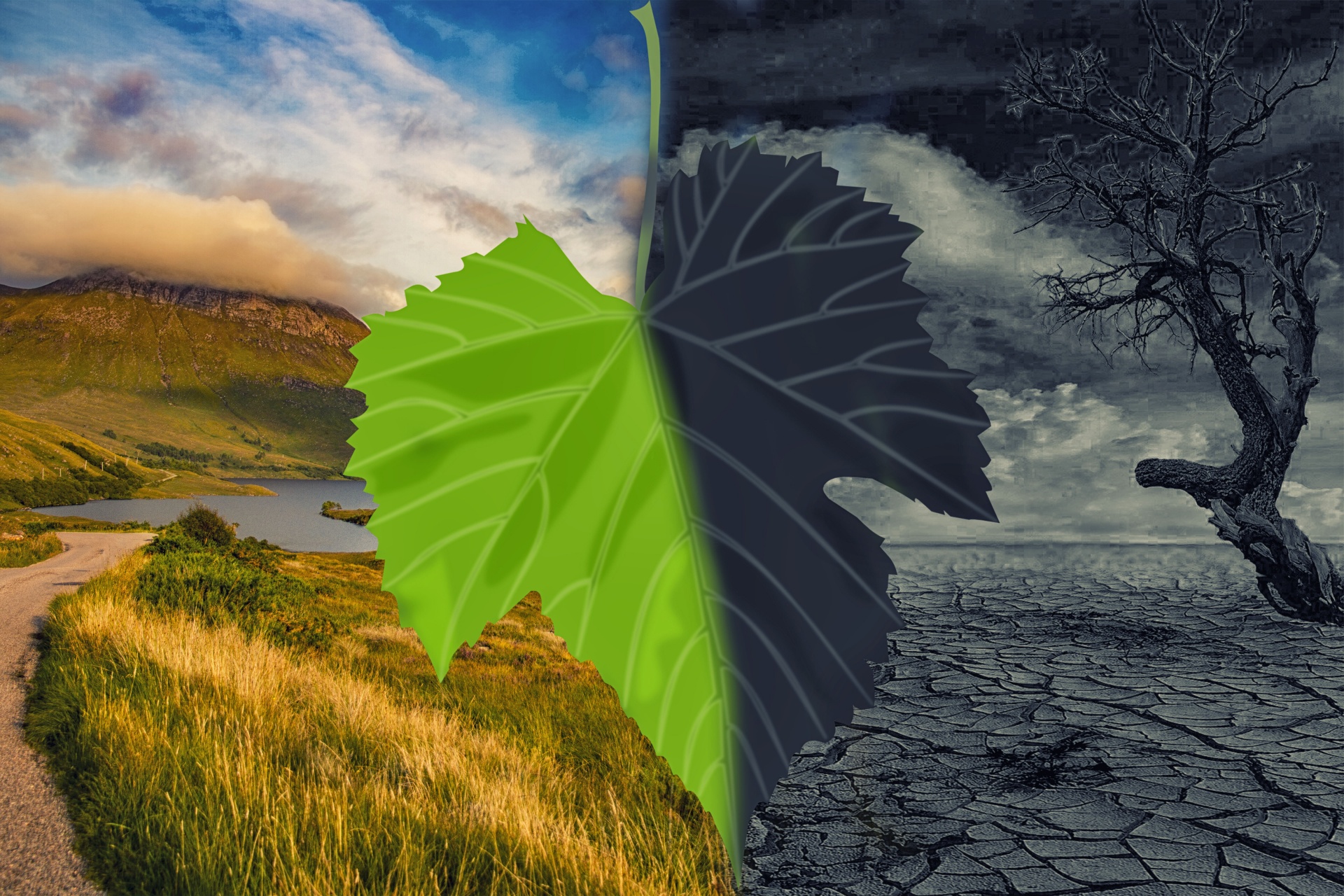
Imagen de kai Stachowiak. Licencia: CC0 Public Domain Imagen de kai Stachowiak. Licencia: CC0 Public Domain

Hace unos días estuve en Bogotá, que en ese momento estaba afectada por incendios forestales, lo que había levantado el interés en temas medio ambientales en mucha gente. De hecho en una reunión de mapeadores uno de los temas de conversación fue “qué” mapear para contribuir de alguna manera a visibilizar problemas urbanos que se agudizan con el cambio climático.

La charla fue larga y nutrida y todos aprendimos un poco de todos. Quedando en evidencia que se necesita hablar más sobre esto para que las personas que quieran contribuir al mapeo y de paso colaborar de alguna forma con la mitigación del cambio climático puedan encontrar fácilmente cómo hacerlo.

Así pues, a continuación los temas de mapeo planteados en esa charla y algunos otros que agregué a la lista producto de conversaciones con otros mapeadores.

See full entry

Location: Comuna 13 - San Javier, Perímetro Urbano Medellín, Medellín, Valle de Aburrá, Antioquia, RAP del Agua y la Montaña, 050033, Colombia

Image by kai Stachowiak. License: CC0 Public Domain Image by kai Stachowiak. License: CC0 Public Domain

A few days ago I was in Bogotá, which at that time was affected by forest fires, which had raised interest in environmental issues in many people. In fact, at a mappers meeting, one of the topics of conversation was “what” to map to contribute in some way to making visible urban problems that are worsening with climate change.

The talk was long and rich and we all learned a little from each other. It is evident that more needs to be said about this so that people who want to contribute to mapping and in some way collaborate with climate change mitigation can easily find how to do so.

So, below are the mapping topics raised in that talk and some others that I added to the list as a result of conversations with other mappers.

See full entry

Location: 6.257, -75.614
Posted by Xvtn on 31 January 2024 in English. Last updated on 5 February 2024.

TL;DR

New users are requesting a review on their changesets, requests which go unanswered most of the time. We can use OSMCha to easily find them and review them.

“Review Requested”

When just starting out, I’m sure most of us have wondered whether we should tick the box stating “I would like someone to review my edits.” Ever wondered who is reviewing those when requested? Turns out, usually, it’s nobody. (See note below)

In my experience, brand new OSM contributors make mistakes frequently. Also, most new mappers don’t stick with it. Both of these points are OK, but we can correct the mistakes to improve data quality, and hopefully let new mappers feel welcome and like they’re part of the community.

The Solution

Fortunately, there is an excellent tool that makes it easy for experienced mappers to find newbie, review-requested, or suspicious changesets - OSMCha. You can also monitor your local area. It’s really fun!

  1. Go to OSMCha.org
  2. Log in with your OSM account.
  3. (Optional) Click on your OSM username dropdown, choose Account Settings. Remove text in “Review Comments Template”. If you don’t, when you verify a changeset as good or bad in OSMCha, it will make an aggressive-sounding comment on your behalf. I prefer to write my own comment on each changeset I review for new mappers.
  4. Click the Filters button and choose filters, see note 1 below.
  5. Click Save in the upper left so you can come back later without having to enter filters again.
  6. Pick a changeset on the left bar, review the changes, and optionally leave a comment. See note 2 below.
  7. In the upper right, verify the changeset as good or bad, and maybe add tags. (You can always change things later.)

Notes

Changeset Filters

For reviewing new mappers’ changesets, here are the filters I use:

  • Location - Draw a border around my local area. (I review all in Utah and some in USA west)
  • Reasons for Flagging - “New Mapper”, “Review Requested” (Set to AND!)
  • Review Status - “Not Reviewed”

See full entry